release
XKV Opens Its HTTP Mode to Other Services and Exports Its Reasons as W3C PROV
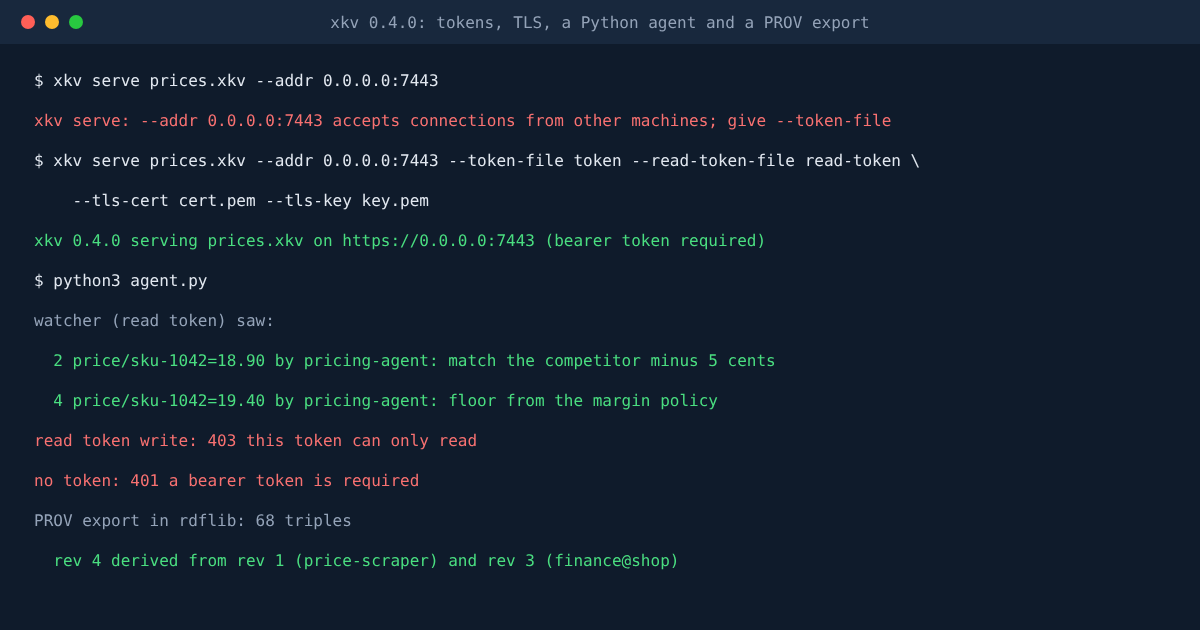
Until now, XKV’s HTTP mode had no authentication, so the advice was to keep it on localhost. That ruled out the setup it suits best: a few services, or a few AI …
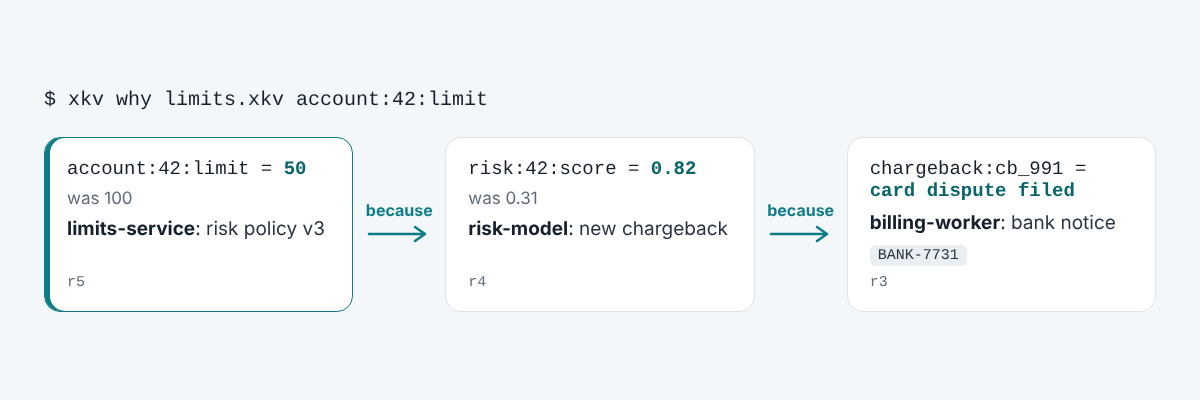
Every write to XKV records who made it, why, and which earlier change caused it. Ask any value how it got there, and XKV walks the chain back across keys to where it started. One Go package, one file, no dependencies.
0 lost
acknowledged writes across 1000 SIGKILLs of a writing process
397 of 397
torn-write cut points recovered to the last whole transaction
197 ms
to open a store holding a million revisions
124 → 5.2 MB
compaction of a million revisions, every chain of causes kept
Measured on a 2-CPU Linux machine. Each number comes from the test results kept in the code repository.
release
Until now, XKV’s HTTP mode had no authentication, so the advice was to keep it on localhost. That ruled out the setup it suits best: a few services, or a few AI …
case studies
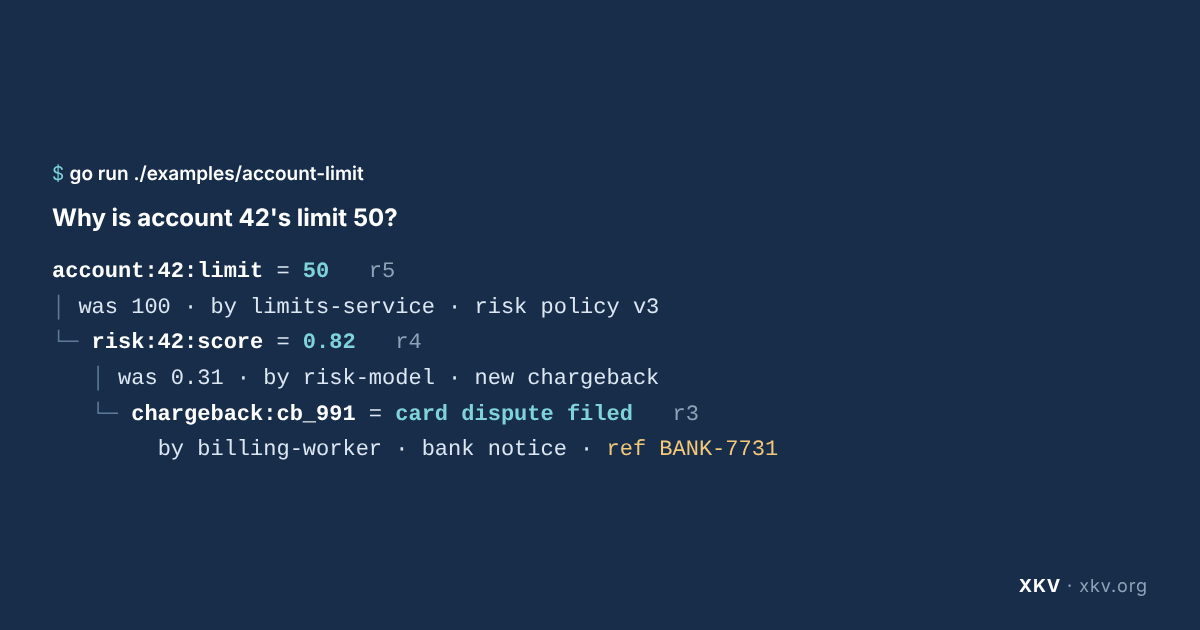
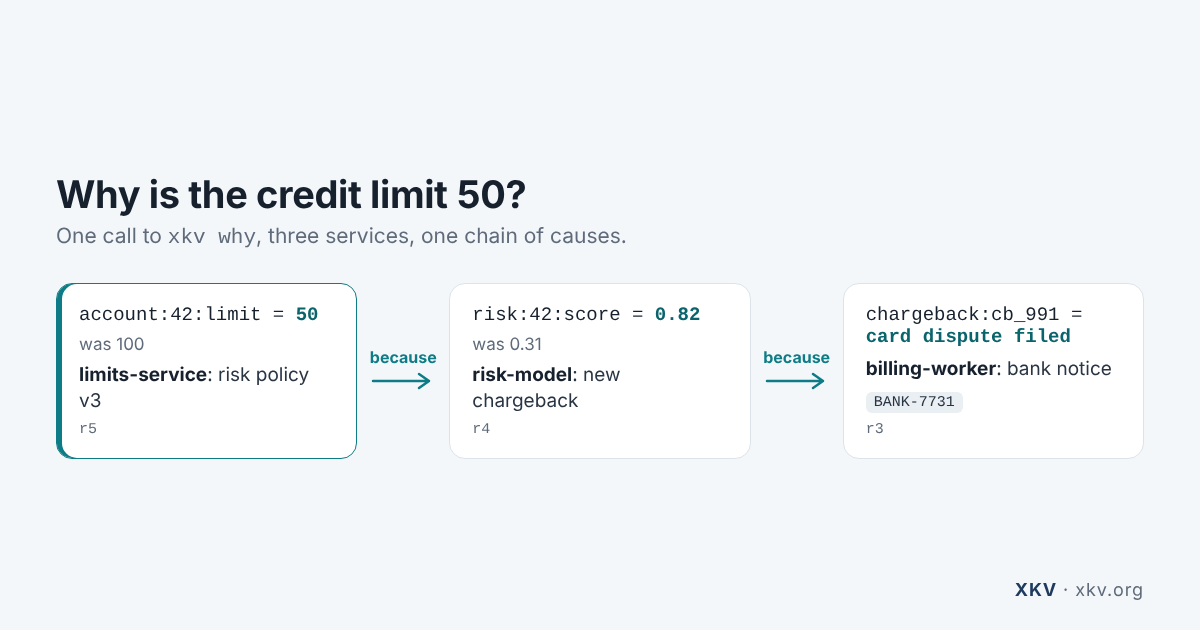
A customer calls support. Their credit limit was 100 yesterday and it’s 50 today, and nobody told them why. The support agent can see the 50. Everything else is …
case studies
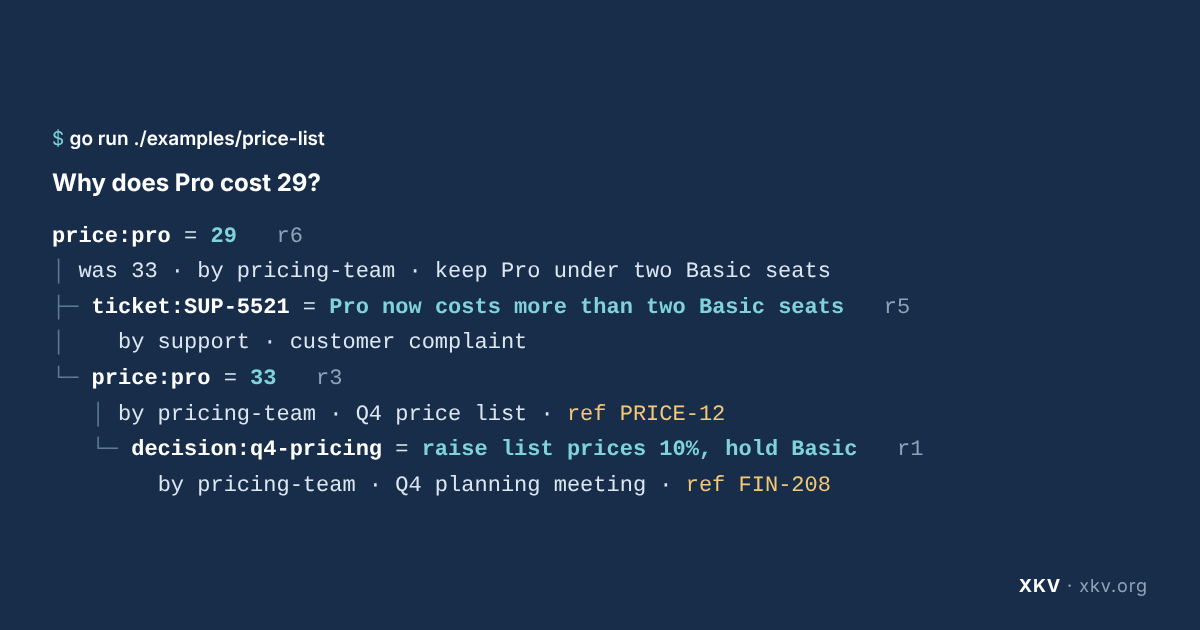
Prices change together. A new quarter’s price list touches every plan at once, and a half-applied list is worse than an old one: for a few minutes Pro might cost …
case studies
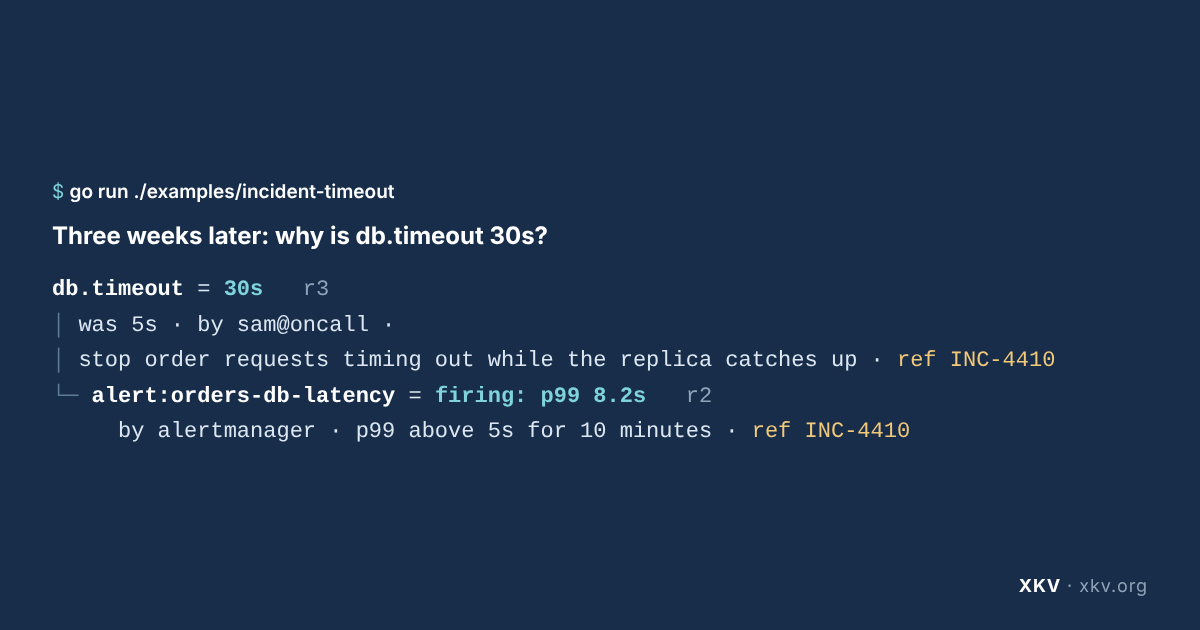
At two in the morning an alert fires: the orders database is answering slowly, and order requests are timing out. The on-call engineer raises the database timeout from 5 …
case studies
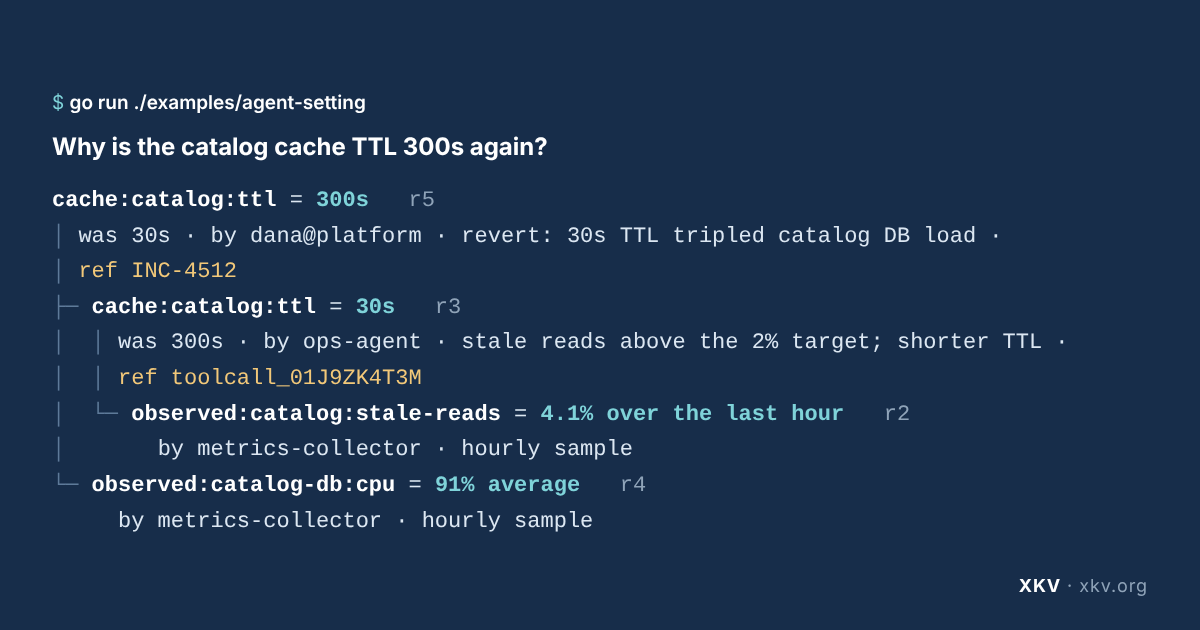
An operations agent watches the product catalog. Its metrics show 4.1% of reads returning stale data, above the 2% target, so it shortens the catalog cache’s …
testing
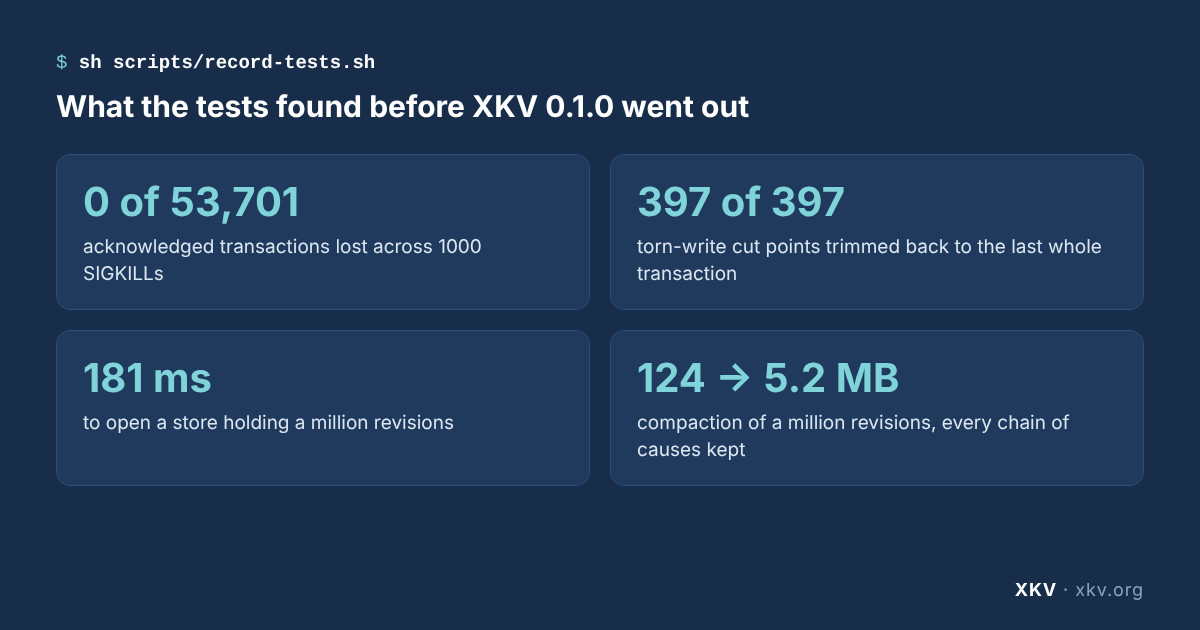
A store that keeps the reason behind every value is only useful if it keeps the value too. So before 0.1.0 went out, each promise XKV makes got a test aimed straight at …
explainer
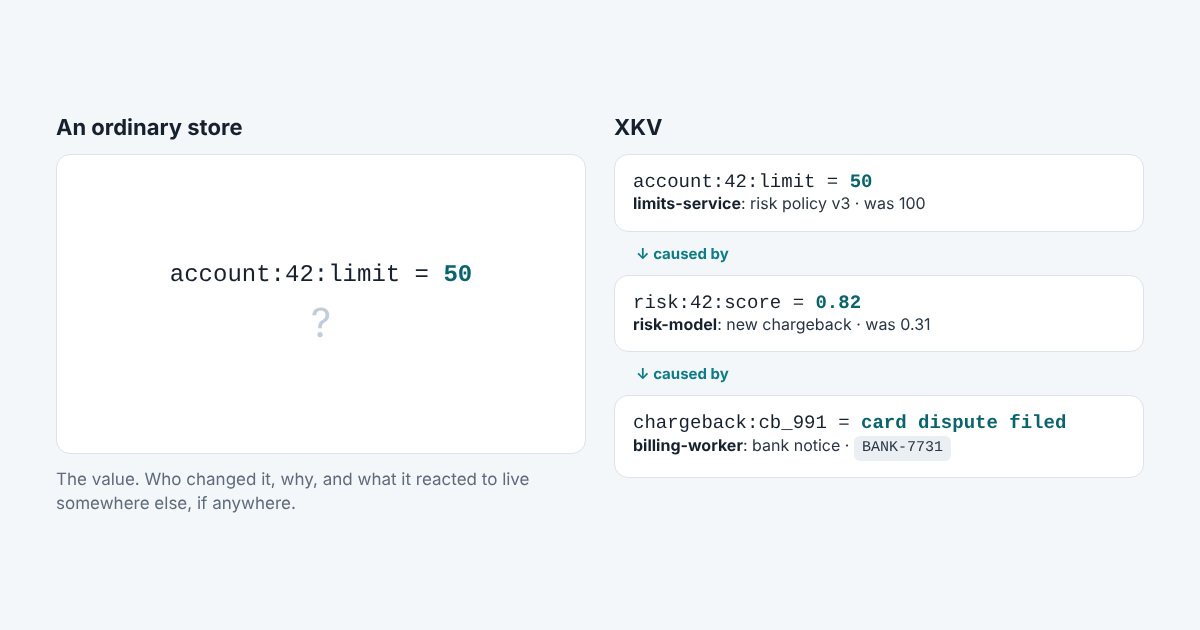
The values that cause the most trouble are small. A credit limit. A timeout. A price. A flag that switches a feature on for ten percent of users. Each one fits in a few …
about
XKV stands for explainable key-value. KV is the usual shorthand for a key-value store, the simplest kind of database there is: you put a value under a key and get it back …
release
XKV 0.1.0 is out. It’s a small key-value store for Go that keeps one thing other stores throw away: the reason. Every write records who made it, why, and which …
XKV fits where small values cause big trouble: limits, prices, feature switches, timeouts, and the settings AI agents now change. Embed it in a Go program, or run the xkv command next to anything else.